
If you’ve got stainless steel scrap in Melbourne sitting in a workshop, a kitchen or a yard, it’s almost certainly worth more than you think. Stainless is one of the more valuable metals most people throw away without realising — a single commercial kitchen bench, an old brewery tank or a pallet of 316 offcuts can be worth considerably more than the same weight of ordinary steel. And unlike a lot of scrap, stainless holds its value because it’s recycled endlessly without losing its properties.
The problem is that most people can’t tell stainless from plain steel, and the ones who can often don’t know that not all stainless is worth the same. This guide covers both: how to identify what you’ve got, which grades are worth more, and how to prepare it so you’re paid properly.
Is stainless steel actually worth recycling?
Yes — and it’s worth more than most people expect.
Stainless steel isn’t valuable because of the iron in it. It’s valuable because of what’s mixed in: chromium and, in most grades, nickel. Nickel is the expensive ingredient, and it’s the main reason one piece of stainless can be worth several times another piece that looks identical.
Stainless is also 100% recyclable with no loss of quality. Melt it down and it comes back as stainless steel, not a degraded version of it — the Australian Stainless Steel Development Association is a good starting point if you want the technical detail on grades and composition.
For you, that means it’s almost never worth putting stainless in a skip.
How to tell if it’s stainless steel
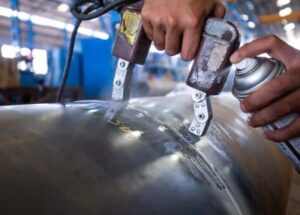
The magnet test — useful, but not conclusive.
Grab a fridge magnet and hold it against the metal:
- It doesn’t stick, or sticks only weakly — likely 304 or 316, the more valuable austenitic grades
- It sticks firmly — could be 430 stainless (lower value) or ordinary carbon steel
One caveat worth knowing: cold-worked 304 can become slightly magnetic. Bending, pressing or forming changes its structure, so a sink that’s been deep-drawn might tug at a magnet slightly at the corners while still being genuine 304. Weak, patchy magnetism usually means worked 304 — not a cheaper grade.
Visual clues:
- No rust, or only surface staining — stainless doesn’t rust through the way carbon steel does
- Dull silver-grey, not the bright shine of aluminium, and noticeably heavier
- Stamped markings — look for 304, 316, 18/8, 18/10 or SS on the underside of sinks, inside tanks, on pipe and on fittings
If you’re unsure, don’t guess. Send us a photo at info@metalgrouprecycling.com.au and we’ll tell you what it is before you move it anywhere.
The three grades that matter
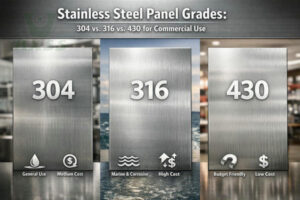
304 — the common one
Roughly 18% chromium, 8% nickel, which is why you’ll sometimes see it stamped 18/8. This is the workhorse grade: kitchen sinks and benches, splashbacks, balustrades, food processing gear, architectural trim.
It’s the grade you’ll encounter most often, and it’s genuinely valuable — the nickel content sees to that.
316 — the marine grade, worth more
316 is 304 with around 2–3% molybdenum added. That molybdenum makes it far more resistant to salt and chlorides, which is why it’s used near the coast, in swimming pool fittings, in chemical plants, in marine hardware and in dairy and brewing equipment.
316 is worth more than 304, because it contains more of the expensive alloying elements. If you’ve got a load that includes 316, it’s worth keeping it separate rather than letting it be graded down with the 304.
430 — the cheaper one
430 is ferritic stainless: chromium but essentially no nickel. It’s magnetic, and it’s used where corrosion resistance matters less and cost matters more — some appliance panels, decorative trim, exhaust components.
It still has value, but noticeably less than 304 or 316, because the nickel isn’t there.
The short version: nickel is what you’re being paid for. 316 > 304 > 430.
Where stainless steel scrap in Melbourne comes from
We collect stainless across metropolitan Melbourne from all of these:
- Commercial kitchens and hospitality — benches, sinks, splashbacks, shelving, extraction hoods. A single café refit produces a surprising amount.
- Dairies, breweries and food processing — tanks, vats, pipework and fittings, usually 316
- Fabricators and sheet metal shops — offcuts, drops and trim, often already sorted by grade
- Plumbers and builders — balustrades, handrails, tanks, architectural cladding
- Manufacturing and workshops — production offcuts, worn machinery components, guarding
- Demolition and fit-out crews — clearing shopfronts, commercial kitchens and lab spaces
If your trade generates stainless regularly, it’s worth talking to us about ongoing collection or a scrap bin on site rather than one-off loads.
What affects the price you’re paid
Four things, roughly in order of importance:
1. Grade. As above — 316 tops, then 304, then 430. This is the single biggest factor.
2. Cleanliness. Stainless attached to carbon steel brackets, timber, plastic, rubber seals or insulation grades down. If we have to strip it, that comes out of the value. Tanks with insulation jackets are a common example.
3. Quantity. Larger, better-sorted loads earn better rates per kilo — the handling cost per kilo drops.
4. The global market. Nickel is traded internationally, so stainless prices move with it. That’s why we quote on the day rather than publishing a fixed price list.
For current rates, see our stainless steel scrap prices page or call +61 452 610 349 — prices shift, and a phone quote will always be more accurate than a number on a website.
How to prepare stainless steel scrap
You don’t have to do any of this — we’ll take it as it is. But each of these puts more money in your pocket:
- Separate stainless from carbon steel. Mixed loads get graded to the lower metal. Ten minutes with a magnet can meaningfully change what you’re paid.
- Keep 316 apart from 304 if you know which is which. Even a rough separation helps.
- Strip the obvious non-metals — timber, plastic fittings, rubber seals, insulation
- Don’t bother polishing or degreasing. Light grease and food residue is normal and doesn’t affect grading. Heavy contamination does.
- Stack flat sheet and bench tops rather than crumpling them — easier to handle and load
How collection works
For general guidance on recycling in Victoria, Sustainability Victoria is a useful reference.
- Tell us what you’ve got. Call +61 452 610 349, or email a photo to info@metalgrouprecycling.com.au. A rough idea of quantity is fine — “about a ute load” is enough to quote from.
- We quote before we come out. Grade and price per kilo, based on the market that day.
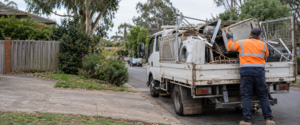
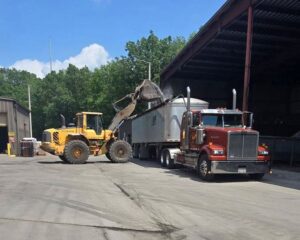
- We collect free across metropolitan Melbourne — often same day, otherwise next business day.
- Weighed and paid on collection.
We handle everything from a single sink through to a full commercial kitchen strip-out or a factory clearance. For larger jobs see industrial site metal cleanup.
Frequently asked questions
Is stainless steel magnetic?
Usually not — 304 and 316 are austenitic and generally non-magnetic. But cold-worked 304 can become weakly magnetic after bending or pressing, and 430 stainless is magnetic. A magnet is a useful first check, not a definitive test.
What’s the difference between 304 and 316 stainless?
316 contains around 2–3% molybdenum that 304 doesn’t. That makes it far more resistant to salt and chemicals, which is why it’s used in marine, pool, dairy and chemical applications. It’s also worth more as scrap because it contains more alloying metal.
Is stainless steel worth more than aluminium?
Per kilo, stainless is generally worth more than aluminium, though both fluctuate with the market. The bigger practical difference is weight — stainless is roughly three times denser, so the same volume of scrap weighs considerably more. See our guide to aluminium recycling for a comparison.
Do you take stainless steel with carbon steel attached?
Yes. We’d rather you brought it in as-is than left it behind. It grades lower than clean stainless because of the stripping involved, so separate it if that’s practical — but don’t let it stop you calling.
Do I need a minimum amount for free pickup?
Free collection applies from a minimum quantity across metropolitan Melbourne. Call and we’ll tell you straight away whether your load qualifies, or whether it’s better to drop off or hold until you’ve got more.
What happens to stainless steel after you collect it?
It’s sorted by grade, processed, and sold to mills where it’s melted and returned to production as new stainless. Because stainless recycles without losing quality, most “new” stainless already contains a large proportion of recycled material.
Get a price on your stainless steel
Call +61 452 610 349 — Monday to Saturday, 7am to 7pm. Tell us what you’ve got and we’ll quote on the phone. Free collection across Melbourne, no call-out fee, paid at collection.
Not sure what grade you’ve got? Send a photo to info@metalgrouprecycling.com.au and we’ll tell you before you move a thing.