
You have an old car battery sitting in your garage, and you are not sure what to do with it. Maybe the mechanic pulled it out during a service and handed it back to you. Maybe you replaced it yourself and the dead one has been on the shelf ever since. Either way, you know you cannot throw it in the bin, but you are not sure where to take it or whether it is even worth anything.
This is one of the most common situations vehicle owners in Melbourne face. Car batteries do not last forever. Most lead-acid batteries have a lifespan of three to five years, and when they die, they become a storage problem. They are heavy, they contain hazardous materials, and they cannot go out with regular household waste or kerbside recycling.
The good news is that car battery disposal in Melbourne does not have to be complicated. There are services that will collect your old battery for free, pay you cash for it, and recycle the materials responsibly. This guide explains how the process works, what the law requires in Victoria, what your old battery is actually worth, and how to handle it safely until it is collected.
Why Car Batteries Cannot Go in Regular Waste
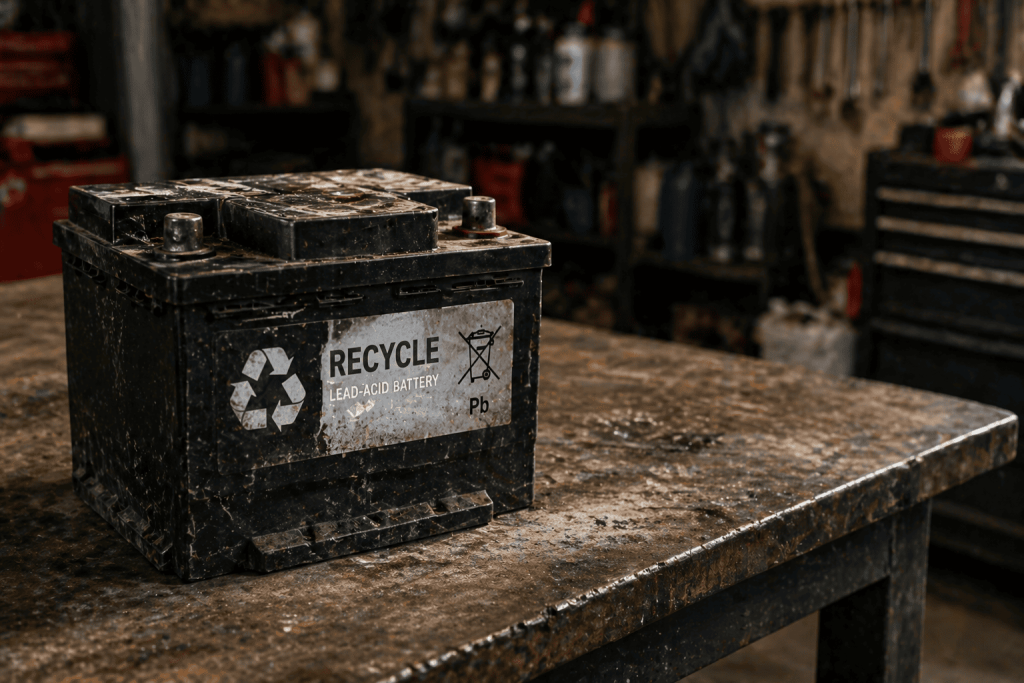
A standard car battery is a lead-acid battery. It contains lead plates submerged in sulphuric acid, both of which are classified as hazardous materials. If a car battery ends up in landfill, the casing can crack over time and release lead and acid into the soil and groundwater. Lead is a toxic heavy metal that does not break down naturally and accumulates in the environment.
In Victoria, it is illegal to dispose of car batteries through regular household waste, kerbside collection, or general landfill. Under the Environment Protection Act 2017, used lead-acid batteries are pre-classified as reportable priority waste. This means they must be handled, transported, and processed by licensed operators who follow specific EPA Victoria guidelines.
The penalties for illegal dumping of hazardous waste in Victoria are significant. Beyond the legal risk, there is a practical safety concern. A damaged or leaking car battery can cause chemical burns, release toxic fumes, and create fire hazards if the terminals short-circuit against metal objects.
How Car Battery Disposal Works in Melbourne
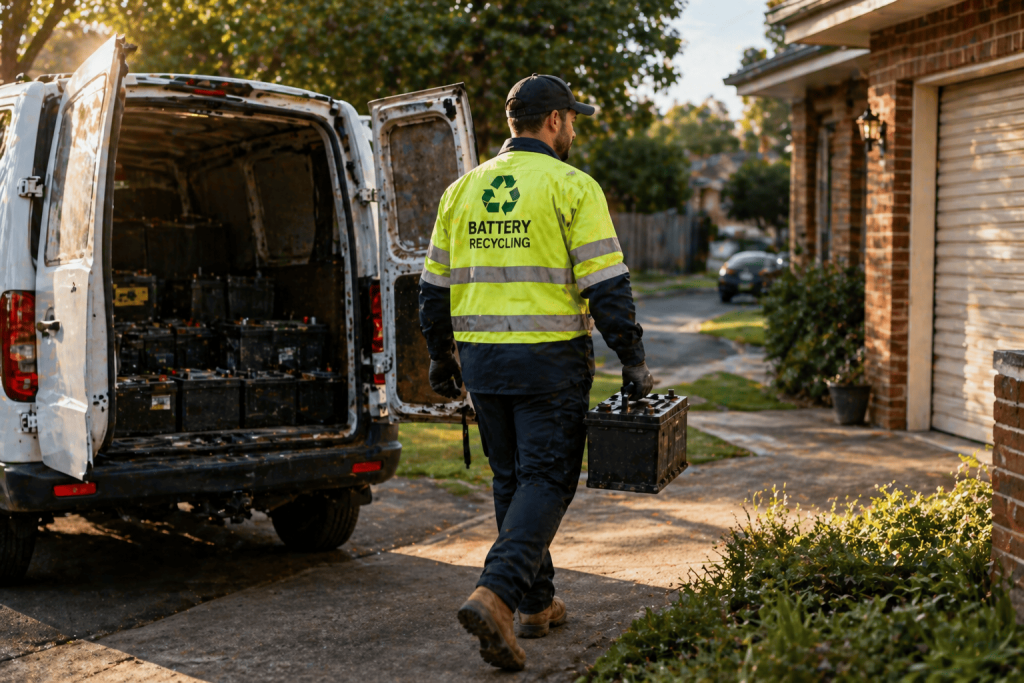
Getting rid of an old car battery through a professional car battery disposal service in Melbourne is straightforward. Here is the typical process from start to finish.
Step 1: Contact a Licensed Battery Recycler
Call or submit an online enquiry with your details. Let them know how many batteries you have, the type (car, truck, motorbike, or other), and your location. Most recyclers service the entire Melbourne metropolitan area and parts of regional Victoria.
Step 2: Schedule a Free Pickup
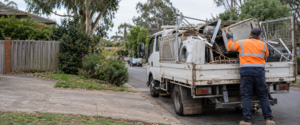
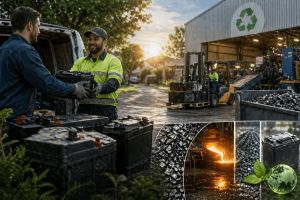
Reputable car battery disposal services offer free collection. You do not need to transport the battery yourself, which avoids the safety risks of carrying a heavy, potentially leaking battery in your vehicle. Many services offer same-day pickup within Melbourne.
Step 3: Get Paid on Collection
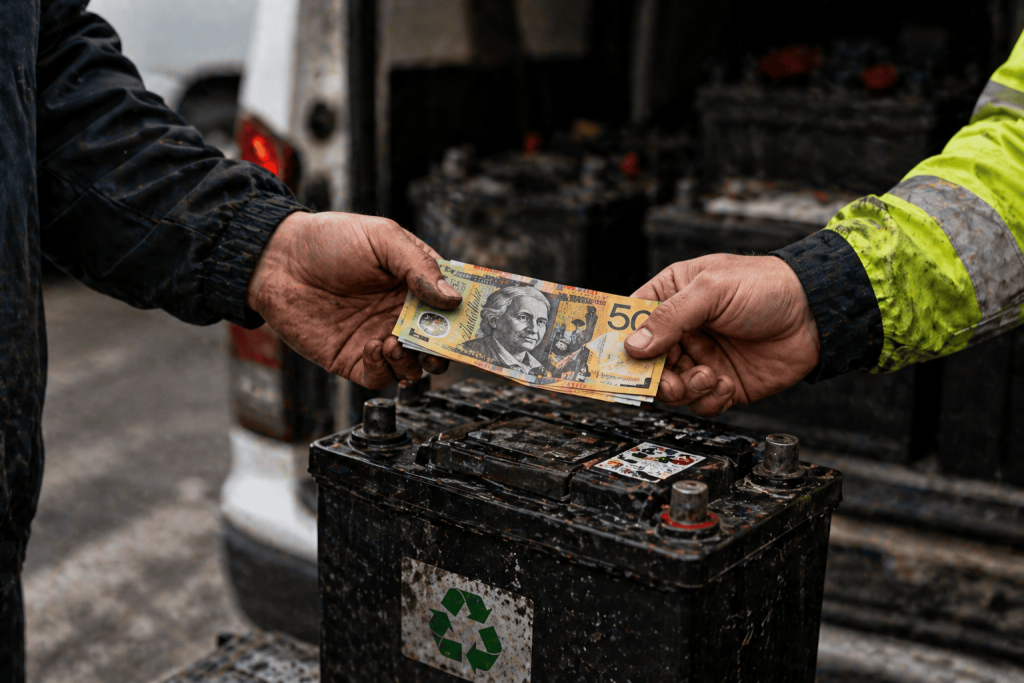
Unlike most waste disposal, old car batteries have real value because of the lead and other metals inside them. When the driver collects your battery, you receive payment on the spot. This is usually cash or an instant bank transfer. The amount depends on the battery size, type, and current scrap lead prices.
Step 4: Professional Recycling
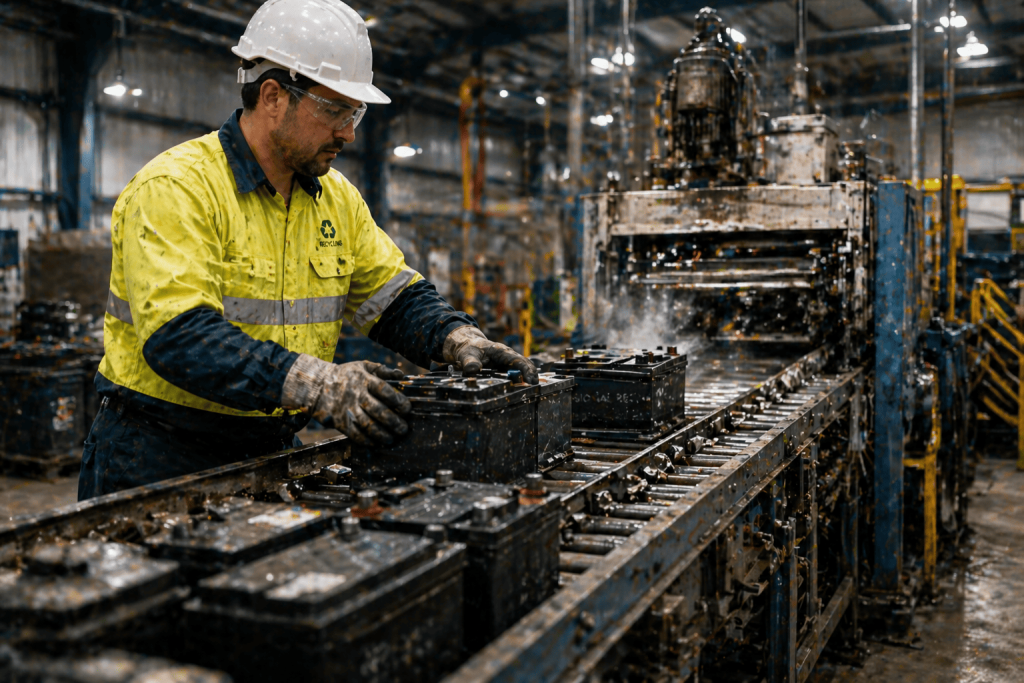
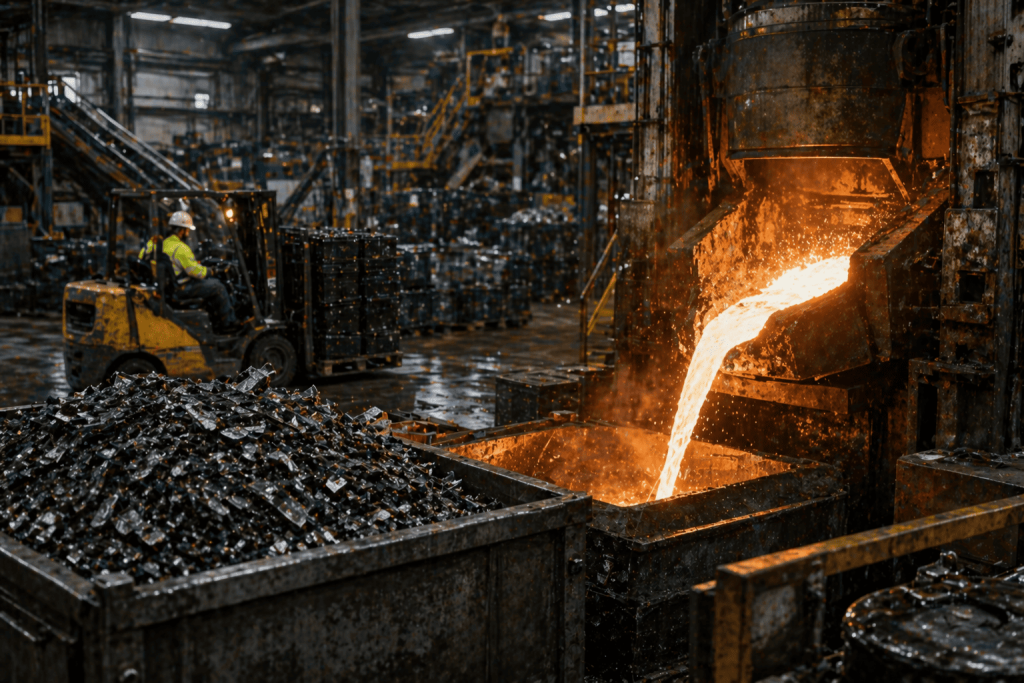
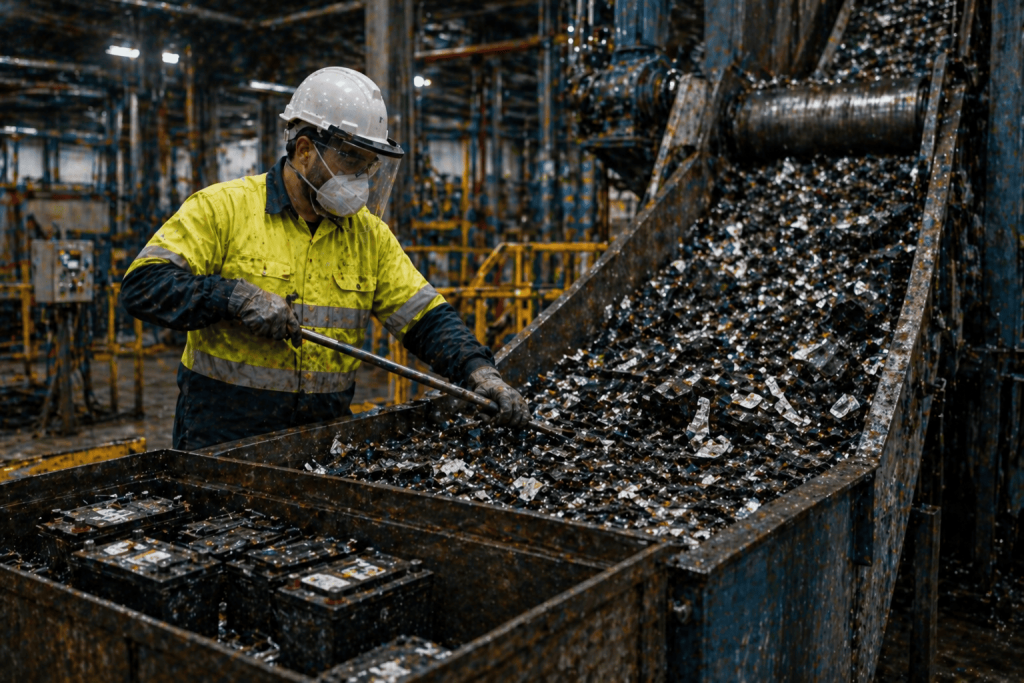
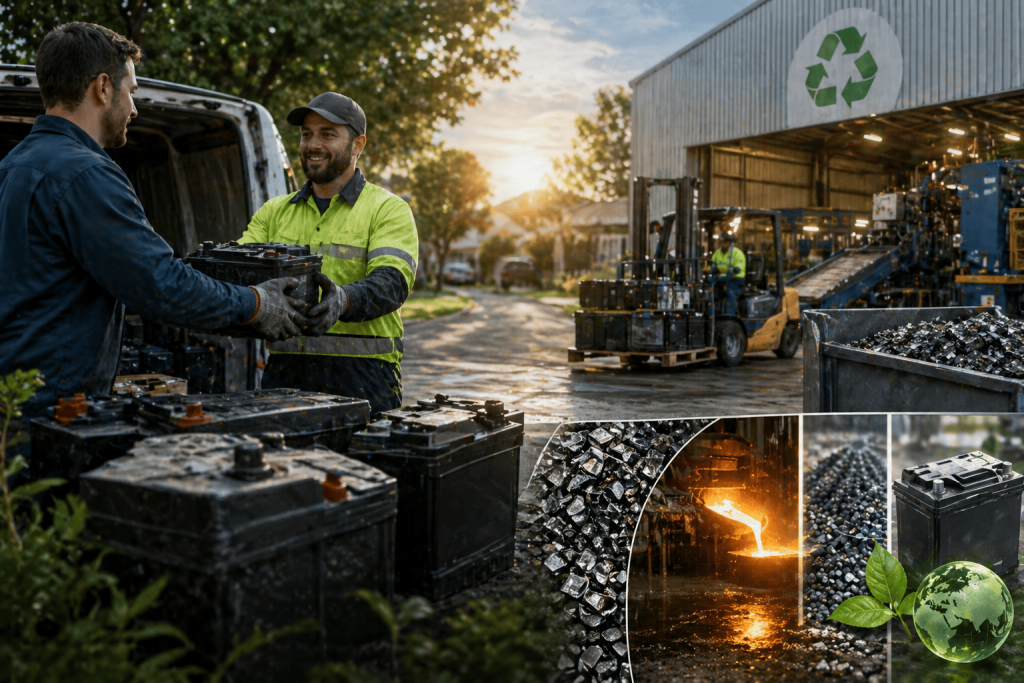
After collection, the battery is taken to a licensed recycling facility. The recycling process involves draining the sulphuric acid for neutralisation and safe disposal, breaking down the battery casing (typically polypropylene plastic), separating and smelting the lead plates for reuse, and recovering the plastic for recycling into new battery cases. Up to 99% of a lead-acid battery can be recycled, making it one of the most recyclable consumer products in existence.
What Your Old Car Battery Is Worth in Melbourne
Car batteries are not worthless junk. The lead inside them has real commodity value, and scrap battery prices fluctuate with global lead markets. Here is a general guide to what you can expect in Melbourne.
A single standard car battery typically weighs between 10 kg and 15 kg and contains roughly 6 kg to 8 kg of recoverable lead. Based on current market conditions, individual car batteries usually attract payments in the range of $5 to $15 each. Larger batteries from trucks, boats, and heavy machinery contain more lead and are worth proportionally more.
If you have multiple batteries, the value adds up. Mechanics, auto electricians, fleet operators, and wrecking yards that accumulate batteries in volume can receive significantly higher total payments. Metal Group Recycling pays cash for all types of scrap batteries and offers free collection across Melbourne.
The price you receive depends on three main factors: the weight of the battery, the current global lead price, and the condition of the battery. Intact batteries with no leaks are easier to handle and process, which can affect the offer. Batteries that have been sitting for years are still accepted, as the lead inside retains its value regardless of how long the battery has been dead.
Victorian Regulations for Car Battery Disposal
Victoria has specific laws governing how car batteries must be handled, stored, transported, and recycled. Understanding these rules protects you from fines and ensures you are not unknowingly breaking the law.
Classification as Priority Waste
Under the Environment Protection Regulations 2021, used lead-acid batteries are classified as reportable priority waste. This classification means they cannot be disposed of through regular waste channels and must be managed by businesses that hold the appropriate EPA licences.
Storage Requirements
If you are storing old car batteries before collection, EPA Victoria requires that they be kept in containers resistant to battery electrolyte, that leaking batteries be isolated immediately, that terminals be protected against short circuits, and that batteries not be stacked in a way that damages the casings. For households with one or two batteries, this essentially means keeping them upright on a stable surface in a ventilated area, away from metal objects and out of reach of children.
Transport Rules
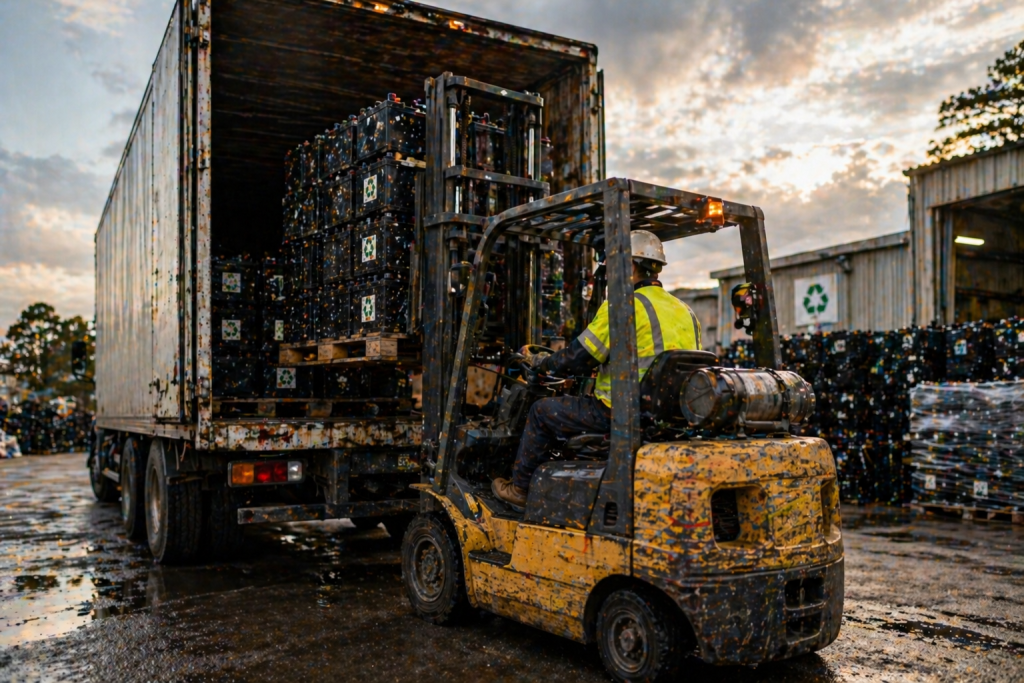
Transporting used lead-acid batteries is regulated under the Australian Code for the Transport of Dangerous Goods by Road and Rail. This is one reason why using a professional collection service makes sense. Licensed recyclers have the correct vehicles, containment equipment, and permits to transport batteries legally and safely.
Business Obligations
If you are a business that generates used car batteries, such as a mechanic workshop, car dealership, or fleet operator, you have additional record-keeping obligations. You must maintain records of incoming and outgoing battery movements for at least two years. Businesses storing more than 5 cubic metres of used lead-acid batteries require an EPA registration.
Which Batteries Are Accepted for Disposal
Professional battery recyclers in Melbourne accept a wide range of battery types, not just standard car batteries. Here is what most services will take.
Standard car batteries are the most common type collected. These are 12-volt lead-acid batteries found in passenger vehicles including sedans, SUVs, hatchbacks, and utes. Truck and commercial vehicle batteries are larger and heavier, typically 12-volt or 24-volt systems, and are worth more due to higher lead content.
Motorbike and scooter batteries are smaller lead-acid units that are still accepted and recyclable. Marine batteries used in boats and personal watercraft follow the same lead-acid chemistry and are handled identically. Deep-cycle batteries used in caravans, solar systems, golf carts, and forklifts often contain more lead than standard car batteries and can attract higher payments.
UPS and emergency lighting batteries found in commercial buildings and data centres are also accepted. Metal Group Recycling accepts all types of lead-acid batteries regardless of size, age, or condition.
How to Store Old Car Batteries Safely at Home
If you cannot arrange immediate collection, you may need to store your old car battery for a few days or weeks. Doing this safely is important because of the hazardous materials inside.
Keep the battery upright at all times. Tilting or turning a battery on its side can cause acid to leak from the vents. Place it on a stable, flat surface where it will not be knocked over. A concrete garage floor or a heavy-duty plastic tray works well. Store the battery in a ventilated area away from direct sunlight and heat sources. Lead-acid batteries can release hydrogen gas, particularly if they are damaged, and this gas is flammable in enclosed spaces.
Do not stack anything on top of the battery or place metal objects near the terminals. If the positive and negative terminals are bridged by a metal object such as a wrench or wire, the battery can short-circuit, generate extreme heat, and potentially cause a fire. If the battery shows signs of cracking, swelling, or leaking fluid, place it in a plastic container or heavy-duty plastic bag and arrange collection as soon as possible.
Wear gloves when handling old batteries. The white powdery residue commonly found around the terminals is lead sulphate, which is toxic if ingested or inhaled. Wash your hands thoroughly after handling any battery.

Where to Dispose of Car Batteries in Melbourne
There are several options available to Melbourne residents and businesses looking to dispose of old car batteries responsibly.
Professional Recycling Services with Free Pickup
This is the easiest option. Services like Metal Group Recycling come to your location, collect the batteries at no charge, and pay you for them. You do not need to transport anything or visit a facility in person. This option is ideal for anyone with one or more batteries at home, at work, or at a job site.
Local Council Transfer Stations
Most Melbourne councils accept car batteries at their transfer stations or resource recovery centres. However, you need to transport the battery yourself, there is usually no payment for the battery, and some councils charge a gate fee for entry. Check your local council website for accepted items and opening hours.
Auto Parts Retailers
Some auto parts retailers and battery specialists accept old batteries when you purchase a replacement. This is convenient if you are already buying a new battery, but they typically do not pay for the old one and may not accept batteries from other sources.
Mechanics and Service Centres
If your mechanic replaces your battery during a service, they will usually dispose of the old one through their own recycling arrangements. Ask your mechanic to confirm they use a licensed recycler rather than sending it to general waste.
What to Check Before Choosing a Battery Disposal Service
Not all operators handle battery disposal to the same standard. Before you hand over your old batteries, consider these questions.
Are they licensed to handle hazardous waste? In Victoria, businesses that transport and process used lead-acid batteries need appropriate EPA licences. Ask for their credentials. A legitimate operator will have no hesitation providing this information.
Is the pickup genuinely free? Reputable services do not charge for collection. If anyone asks you to pay for battery pickup, look elsewhere. The lead inside the battery has enough value to cover the cost of collection and still leave margin for a payment to you.
Do they pay you for the battery? Your old car battery is not rubbish. It contains valuable lead that a recycler can sell. You should receive payment, not the other way around. If a service offers to take batteries for free without paying you, they are keeping all the value for themselves.
Where does the battery end up? Ask where the batteries are processed. A professional recycler will explain their process and confirm that materials are recovered and reused rather than simply dumped or exported without proper handling.
Do they provide documentation? For businesses, a certificate of recycling or disposal receipt is important for compliance records. Even for individuals, having a record of proper disposal provides peace of mind.
Environmental Impact of Car Battery Recycling
Recycling car batteries is not just a legal obligation. It has a measurable positive impact on the environment and resource conservation.
Lead-acid batteries are one of the most successfully recycled products in the world. The recycling rate for lead-acid batteries globally exceeds 95%, which is higher than paper, glass, or aluminium. The recovered lead is smelted and used to manufacture new batteries, meaning the same lead can cycle through multiple battery lifetimes without degrading in quality.
Recycling a single car battery prevents approximately 10 kg of lead from potentially entering the environment. It also recovers around 1 to 2 litres of sulphuric acid that would otherwise require careful disposal. The plastic casing, typically made from polypropylene, is recycled into pellets that are used to manufacture new battery cases and other plastic products.
From an energy perspective, recycling lead requires roughly 35% less energy than mining and processing virgin lead ore. This translates directly into lower carbon emissions per kilogram of lead produced. By choosing to recycle your old car battery rather than letting it sit in storage or, worse, dumping it illegally, you contribute to a circular economy that reduces mining, conserves energy, and keeps hazardous materials out of the environment.
Frequently Asked Questions About Car Battery Disposal in Melbourne
Can I put a car battery in my kerbside recycling bin?
No. Car batteries are classified as hazardous waste in Victoria and cannot go in kerbside recycling, general waste, or household bins. They contain lead and sulphuric acid, both of which require specialist handling. Use a licensed battery recycler or take the battery to your local council transfer station.
How much do you pay for old car batteries in Melbourne?
Payment depends on the battery size and current lead prices. Standard car batteries typically attract a payment of $5 to $15 each. Larger batteries from trucks and machinery are worth more. Metal Group Recycling pays cash on collection for all types of scrap batteries across Melbourne.
Do you pick up single batteries or only bulk quantities?
Most professional battery recyclers in Melbourne will collect even a single battery. Metal Group Recycling offers free pickup for any quantity, whether you have one car battery at home or a pallet of batteries at a commercial site.
Is it safe to store an old car battery in my garage?
Yes, as long as you follow basic precautions. Keep the battery upright on a stable surface, away from heat sources and direct sunlight. Do not place metal objects near the terminals. If the battery is leaking, place it in a plastic container and arrange collection promptly. Lead-acid batteries can release flammable hydrogen gas, so ensure the storage area is ventilated.
What happens to the lead inside recycled car batteries?
The lead is separated from the plastic casing and acid, then smelted at high temperatures to produce refined lead ingots. These ingots are sold to battery manufacturers who use them to produce new lead-acid batteries. Lead can be recycled indefinitely without losing its properties, making the process highly efficient and sustainable.
Can I get fined for throwing away a car battery in Victoria?
Yes. Under the Environment Protection Act 2017, disposing of hazardous waste including lead-acid batteries through improper channels is an offence. The EPA Victoria enforces these regulations and penalties apply to both individuals and businesses. The simplest way to avoid any legal issues is to use a licensed recycling service.
Do you accept batteries from boats, motorbikes, and forklifts?
Yes. Licensed battery recyclers accept all types of lead-acid batteries including those from motorbikes, boats, caravans, forklifts, UPS systems, solar setups, and emergency lighting. The recycling process is the same regardless of the battery’s original application.